Manifest – Call to Action
Erasmus+ project | VET Schools | Students at the core
FullCircle is more than a sustainability project. It is a shared learning journey in which vocational schools, teachers, students, parents and local communities explored what it truly means to close loops, rethink resources and place students at the heart of change.
Throughout the project, the partner schools did not operate as separate islands. By visiting one another’s initiatives, exchanging practices and reflecting together on challenges and solutions, partners continuously learned from each other’s experiences.
Ideas developed in one school inspired adaptations in another, encouraging participants to rethink how circular and sustainable practices could be implemented within their own educational and cultural contexts. In this way, FullCircle became not only a collection of local projects, but also a shared European learning process based on collaboration, exchange and knowledge transfer.
Through hands-on initiatives – such as upcycling ateliers, greener schoolyards, vegetable gardens and outdoor classrooms – partners discovered that sustainability is not an abstract concept, but a lived experience. These practices reshaped mindsets, redefined roles and strengthened relationships within and beyond the school environment.
This Call to Action captures why being part of FullCircle mattered, what partners gained from the process and which lessons are worth carrying forward – within schools and far beyond.
1. Upcycling atelier
LEARNING BY DOING
Circular thinking becomes truly meaningful when students are empowered to take ownership and when schools connect with partners beyond their own walls. By engaging with real materials, real users and real challenges, students develop creativity, responsibility and a deeper awareness of resource use.
KEY LESSON 1
When students are given genuine ownership and schools actively collaborate with external partners, circular practices develop organically and can be sustained over time.
At GO! Campus Nexus DUO (Belgium), the upcycling atelier demonstrated how collaboration with material suppliers, local businesses, clients and community actors can transform a school project into a real-life circular system. Students became highly engaged, took independent initiative and developed a strong sense of ownership, with some even requesting to stay involved after graduation.
At Sredno uchilishte “Vasil Levski” (Bulgaria), students in pharmaceutical, perfumery and cosmetics training produced natural solid soaps as part of their vocational education. By choosing solid soap formats instead of products requiring plastic packaging, they linked professional skills with circular thinking and reflected critically on materials, sourcing and environmental impact.
2. Greening the schoolyard
FROM SPACE TO LIVING SYSTEM
Greening school grounds transforms more than the physical environment. It creates opportunities for learning, strengthens wellbeing, supports biodiversity and climate adaptation, and fosters collaboration across the school community.
KEY LESSON 2
Greening the schoolyard is both a physical and a social transformation. When collaboration and long-term thinking are embraced, it supports climate adaptation, builds skills, nurtures ecosystems and strengthens school communities.
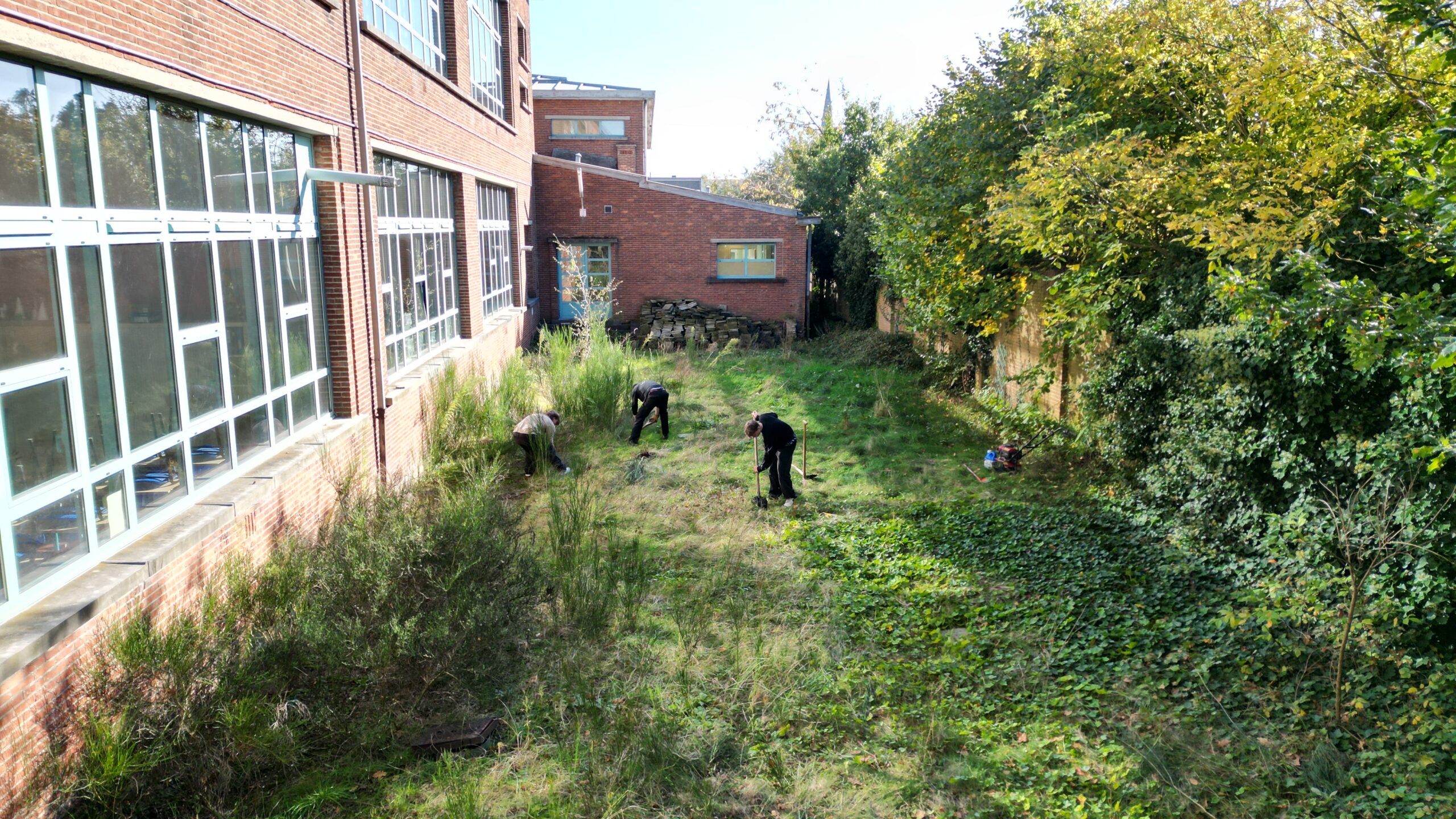
At GO! atheneum en leefschool De Tandem (Belgium), students and teachers collaborated through an eco-team to redesign an inner courtyard into a green learning environment that supports both wellbeing and environmental awareness.
At GO! Atheneum Nexus (Belgium), the school’s upcoming renovation limited large-scale interventions. Instead, learners and staff planted a “tree of the future”, ensuring a lasting contribution to the school’s long-term vision.
At Obchodná akadémia (Slovakia), students and teachers transformed a neglected playground through planting, composting and ongoing maintenance activities. The project not only improved the environment but also strengthened teamwork, practical skills and relationships across the school community.
3. The vegetable garden
FROM CONSUMERS TO PRODUCERS
School gardens help students understand where food comes from and how natural systems work. Through growing food themselves, students develop practical skills, ecological awareness and a stronger sense of responsibility for sustainable food systems.
KEY LESSON 3
School gardens nurture ecological knowledge, responsibility and systems thinking – while demonstrating that education can actively create value rather than merely transmit it.
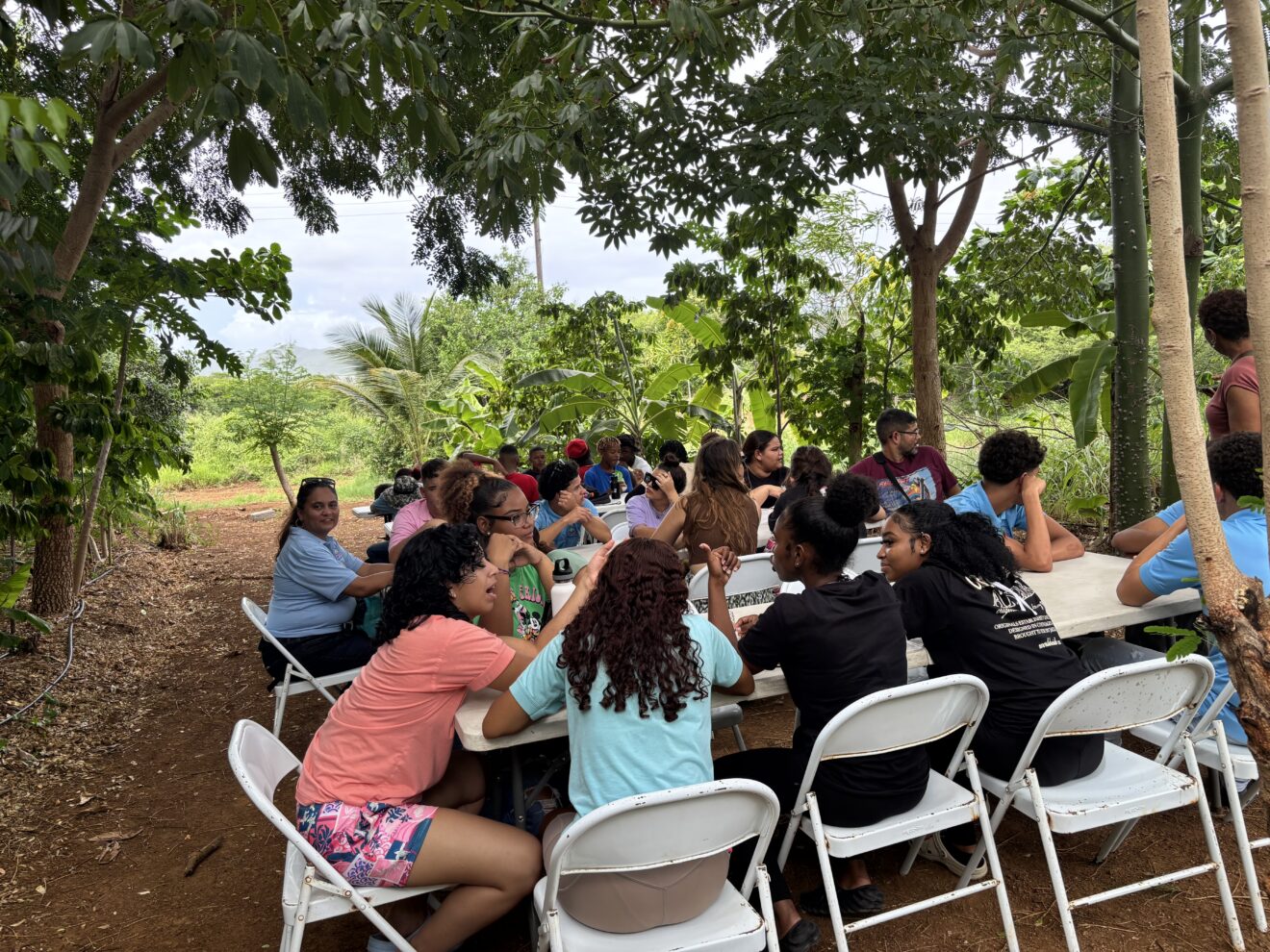
At IPSSEOA Carmine Russo – Ugo Tognazzi (Italy), Stichting Educacion Profesional Basico (Aruba) and Maris Stella VSBO (Curaçao), students explored food production through gardening, composting and hydroponics. Students gained direct experience with plant growth, soil health, water management and sustainable cultivation methods.
As culinary schools, these partners connected food production directly to future professions by using home-grown vegetables and herbs in seasonal dishes and discussions on reducing food waste.
The gardens also promoted shared responsibility across the school community and attracted interest from ministries and local authorities. Exposure to agroforestry and other resilient agricultural systems further broadened students’ understanding of sustainable food production in a changing climate.
4. Outdoor classroom
LEARNING BEYOND WALLS
Outdoor learning environments expand the possibilities of education by making learning more experiential, interdisciplinary and connected to the surrounding environment. They can strengthen community engagement, student wellbeing and environmental awareness when embedded in everyday school practice.
KEY LESSON 4
Learning environments shape behaviour, imagination and relationships. Outdoor spaces can enhance education and strengthen community ties – but only when they are structurally supported, pedagogically integrated and collectively cared for.
At Atheneum GO! Erasmus (Belgium), the outdoor classroom became a symbol of learning beyond traditional school walls. Its development brought together students, teachers and parents around a shared vision of education rooted in community and place.
At Zespół Szkół Gospodarki Żywnościowej i Agrobiznesu (Poland), a food forest was developed as a multifunctional learning environment. The project demonstrated how outdoor settings can improve engagement, concentration and wellbeing while supporting hands-on learning across different subjects.
The projects also highlighted important challenges. Maintenance, accessibility, safety, weather conditions and teacher confidence in outdoor pedagogy all require ongoing attention to ensure that outdoor spaces remain active learning environments rather than symbolic infrastructure.
Call to Action
The Erasmus+ FullCircle project is committed to creating and sustaining green school environments and educational practices. We believe that meaningful change in schools is both possible and sustainable when certain conditions are met:
- Students are trusted as active drivers of innovation;
- Schools open themselves to collaboration with local communities and external partners;
- Sustainability is practised through concrete action, not only taught in theory;
- Education is understood as part of a broader social and ecological system.
Building on these insights, we call on VET schools, educators, policymakers and local authorities to take decisive action:
- Embed circular and green practices into everyday school life;
- Support and empower student-led initiatives and creative experimentation;
- Invest in learning environments that connect education with nature and community;
- Scale up demonstrated best practices through collaboration, networks and policy support.
The impact of FullCircle extends beyond the participating schools themselves. Throughout the project, each partner contributed to the development of educational materials and practical learning resources for teachers and schools across Europe.
By sharing these materials freely, the partnership aims to support wider awareness of circular and sustainable practices in vocational education and training.
FullCircle shows that when education truly comes full circle – from ideas to action, from school to society – the benefits extend far beyond the classroom. Students grow into engaged changemakers, schools become living laboratories for sustainability, and communities gain resilient foundations for the future.